
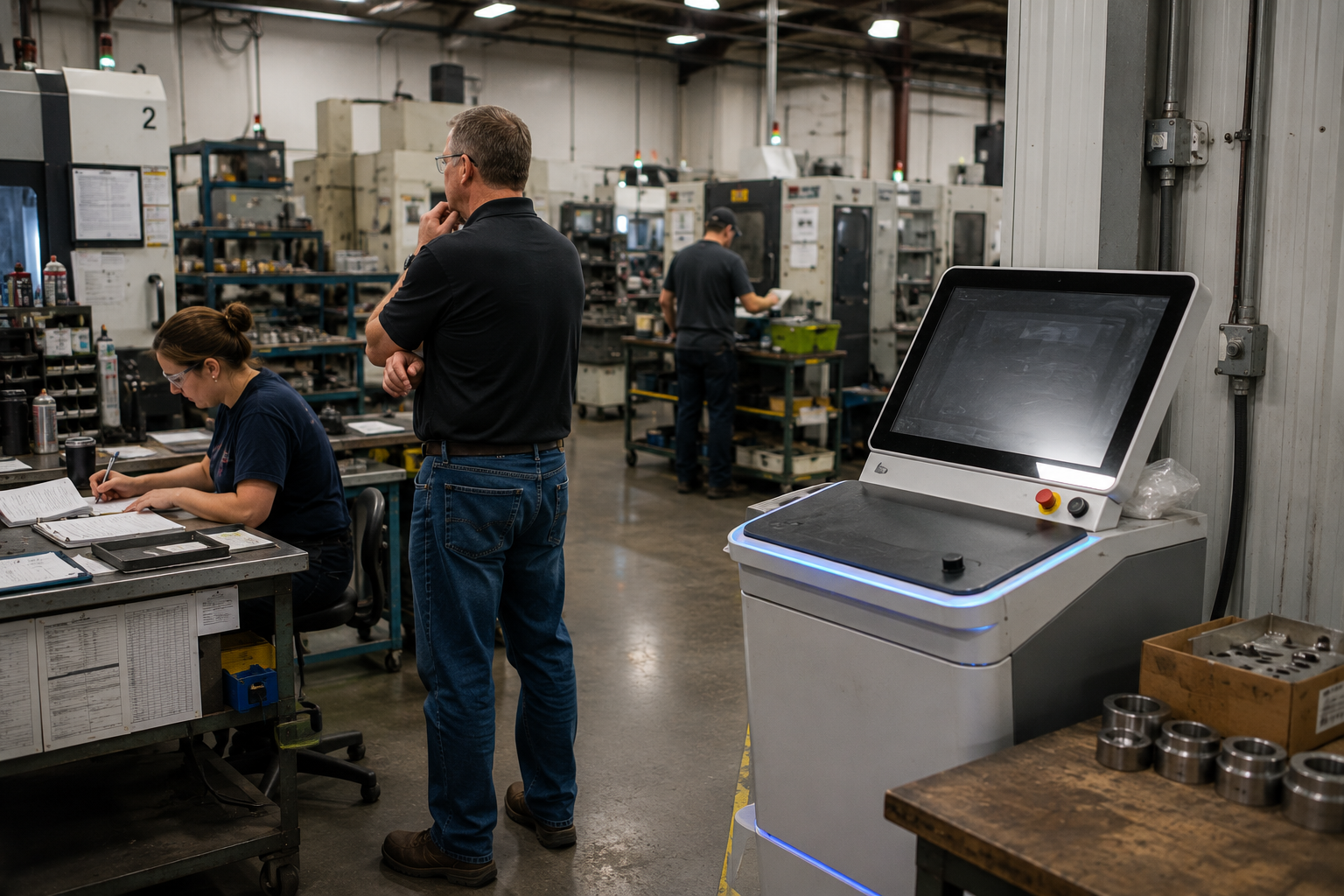
Before You Buy the AI Tool, Answer This One Question First
Every year, a manufacturer somewhere in Michiana buys a new piece of automation equipment during a slower stretch, convinced it'll finally clear a bottleneck on the floor. By late summer, it's sitting in a corner collecting dust. The equipment wasn't the problem. Buying it before anyone mapped out exactly which job it needed to do usually was.
AI is heading toward the same fate at a lot of manufacturers across the Michiana area. Owners are signing up for tools before they've named a single problem those tools are supposed to solve, mostly because the pressure to “do something with AI” has gotten loud enough that thinking clearly about it feels like falling behind.
It doesn't help that most of the marketing skips straight past the actual question. Every pitch promises transformation. Almost none of them ask what, specifically, is slow or frustrating about how your team works right now. That's backwards. The tool should answer a question you already asked, not hand you a new one to figure out after the invoice arrives.
The tool-first trap. Nearly every plant owner has a version of this sitting in their software stack right now. A scheduling module bolted onto the ERP that three people tried once and gave up on. A quality-tracking app bought after a trade show demo, still logging data nobody's reviewed since. A dashboard added because a competitor down the road was showing theirs off, not because anyone had diagnosed a real problem it would fix. AI is pulling on that same instinct, just with a bigger marketing budget behind it. Buying it doesn't automatically fix anything. The payoff shows up only when it's aimed at something specific that was already a problem, not just because everyone else is talking about it.
Where it's earning its keep. Most conversations about AI start with big, futuristic possibilities that have nothing to do with an ordinary Tuesday on a 15-person shop floor. The companies quietly getting real value out of it aren't chasing anything that dramatic. The maintenance log that used to take a technician twenty minutes to sift through for a recurring fault code now surfaces the pattern on its own. A shift report that used to eat half an hour of a supervisor's morning gets drafted before the next shift even clocks in. The customer question about an order's status that comes in every single week gets answered right away, no hold music required. None of that makes headlines. It just makes an ordinary Monday a little shorter.
Start with the friction, not the feature list. Before evaluating a single tool, ask your team where they're really losing time every week. Most employees already know the answer, because they're the ones living it every day. It might be the changeover checklist that gets rebuilt from memory every time a line switches jobs, instead of pulled from what worked last time. It might be the inventory count that still gets reconciled by hand at the end of a shift. Once the actual bottleneck is named, choosing a tool gets a lot simpler, because you're solving something specific instead of browsing a features page and hoping something fits.
That's the conversation worth having before anything gets signed, and it's the one we start with manufacturers across the Michiana area. Before we recommend any piece of technology, including AI, we look at where time and money are truly leaking: the process that's slower than it needs to be, the manual work nobody's questioned in years, the workaround everyone's gotten used to instead of just fixing the actual problem.
The technology is real, and some of it genuinely helps. But the manufacturers seeing the most from it didn't start by shopping for tools. They started by writing down, specifically, what was broken.
Schedule a 10-minute discovery call and we'll help you figure out where AI, or any technology, could create real value before you spend money finding out the hard way. Call 574-857-4332 or use the link above.