
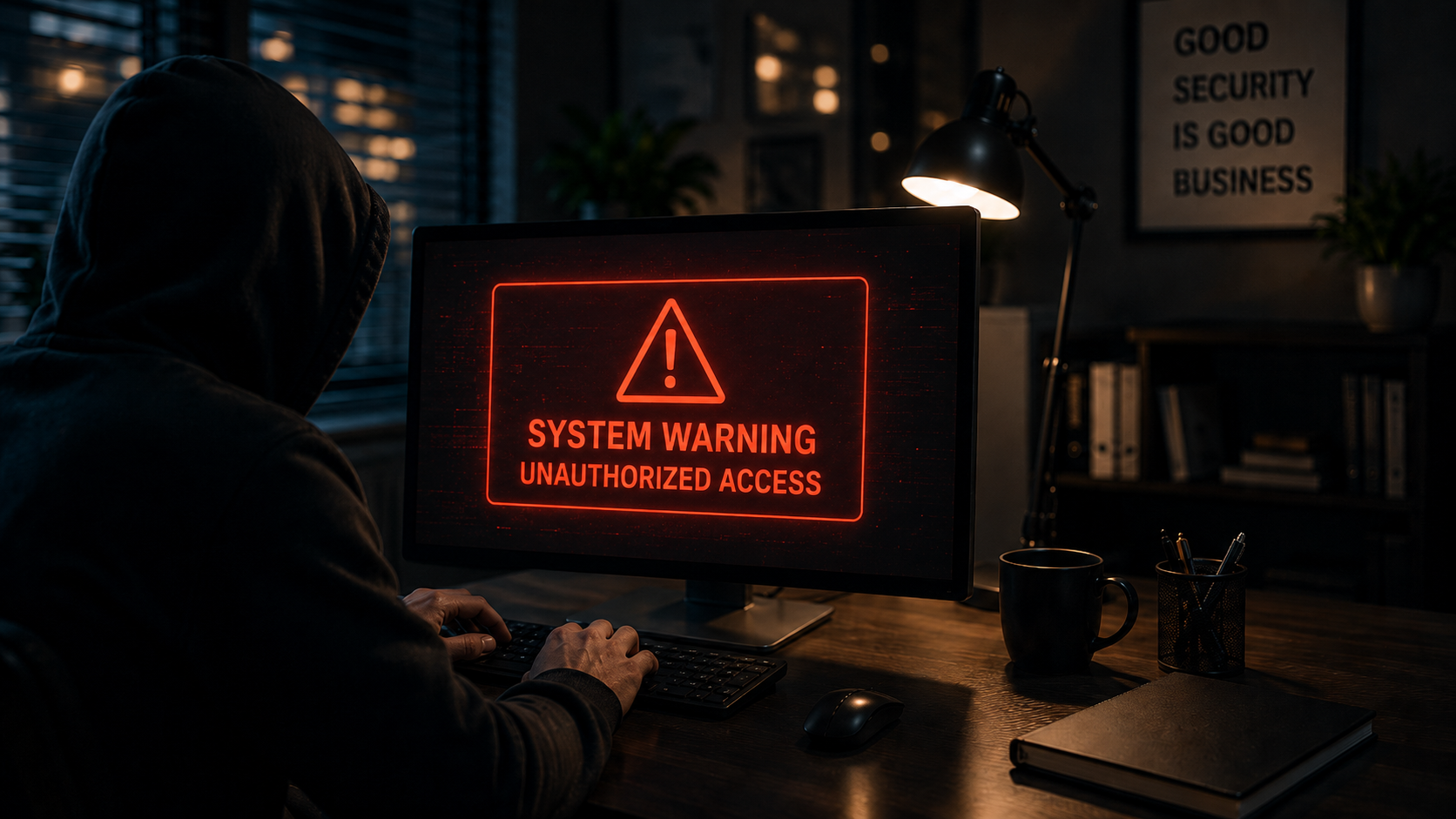
The Threats Getting Into Businesses Right Now Don’t Look Like Threats
The things most likely to cause a real problem for your business this summer are designed to look completely normal. A routine email. A familiar vendor name. A password reset notification arrives at exactly the wrong moment.
The businesses that get hit aren’t usually the ones ignoring obvious warning signs. They’re the ones who assumed everything was fine because nothing looked wrong.
Here’s what’s actually moving underneath.
Fake invoices are working because they’re built to
Business email compromise — where an attacker impersonates a vendor, supplier, or executive your team already knows — doesn’t require hacking anything. It requires one convincing email and a moment of distraction.
Someone on your team receives what looks like a routine payment request from a familiar name. They process it. By the time anyone realizes the request wasn’t legitimate, the money has moved.
These attacks are more common in summer for a specific reason: when the person who normally handles payment approvals is out, requests get rerouted to people who aren’t as familiar with what normal looks like. Temporary stand-ins are less likely to slow down and question urgency — and attackers plan around that.
The fix isn’t complicated. Any financial request that arrives by email should require a separate confirmation — a quick call to a number you already have on file, not the number in the email. That one step stops most of these before they go anywhere.
Phishing works best when people are busy
A distracted employee is a more useful target than an uninformed one. That’s not an observation about your team — it’s how phishing is engineered.
The emails and texts arrive timed to create pressure. A password reset notification right before a meeting. An urgent wire transfer approval that needs a response now. A login alert that looks like it came from IT. The goal is to make stopping feel like losing time.
The most effective protection here isn’t a software solution. It’s making sure your team feels comfortable slowing down when something seems off — an unexpected login request, a payment instruction that came out of nowhere, a link in an email they weren’t expecting. Speed is what attackers are counting on. Taking an extra thirty seconds is how you take it away from them.
Your vendors may be the entry point
Most businesses have more third-party exposure than they realize.
When a vendor with access to your systems gets compromised, that threat doesn’t stay contained to them. It travels through whatever connection they have to your environment — and most business owners have never fully mapped out what those connections are.
Software tools connected to your network. Service providers holding credentials. Contractors whose access was never removed after a project ended. Each one is a path that exists outside your direct control.
The question worth asking isn’t whether you trust your vendors. It’s whether you know which ones have access to what and who internally is responsible for managing those relationships. If those answers aren’t clear, the exposure is real, whether or not anything has gone wrong yet.
We help businesses across Northern Indiana get a clear picture of where they’re exposed — across vendors, employee behavior, and the financial processes most vulnerable to impersonation. Whether you’re in South Bend, running a small operation in Bremen, or managing a team spread across Marshall County, the patterns we see are consistent: the risk usually isn’t where people think it is.
If you want to know where your business actually stands, a discovery call is the place to start. Reach us at http://os.lecsit.com/l/discoverycall-july-2026-blog or call us at 574-857-4332.